

Can Antioxidants Transform Your Skin? Dr. Debbie Palmer Explains
A board-certified dermatologist and leading expert in antioxidants, Dr. Palmer has spent her career exploring the connection between skincare, nutrition, and overall wellness, with her research appearing in leading medical journals and her expertise taking her to lecture stages around the world.
As the founder of Replere, Dr. Palmer has translated her medical knowledge and passion for healthy aging into a skincare philosophy rooted in antioxidants and science. Her approach goes beyond the surface, emphasizing the role that both what we put on our skin and how we nourish our bodies can play in maintaining its health and appearance.
We spoke with Dr. Palmer about the science behind antioxidants, the relationship between nutrition and skin health, how our approach to aging is evolving, and the skincare habits she believes can make a meaningful difference.
Was there a particular moment in your medical career when you realized there was a need for a different approach to skincare and aging?
Shortly after completing my dermatology residency, while working in private practice, I began to recognize a gap in skincare. My patients were looking for something different. They wanted products made without ingredients they were concerned about, including propylene glycol, parabens, and fragrance. At the same time, they didn’t want to sacrifice efficacy that the doctor brands provided. They wanted skincare that was rooted in science and could actually make a visible difference in fine lines, wrinkles, firmness, texture, hyperpigmentation, and redness. A desire for more natural skincare without compromising on science or results really resonated with me.
As a dermatologist, I knew there was an opportunity to bridge those two worlds: to create skincare that was thoughtfully formulated with naturally derived ingredients, while still being grounded in science and designed to deliver meaningful results. That realization ultimately inspired me to create my own skincare line, a natural, science-backed approach to healthy and beautiful skin as it aged.
How did your experience as a dermatologist influence the philosophy and development of Replere?
My approach to skincare is really an extension of how I was trained and how I’ve always viewed health. I’m a board certified dermatologist, but I also went through osteopathic medical school, where I developed a deep appreciation for the connection between health of the whole body and the health of the skin. That holistic philosophy has stayed with me throughout my career. At the same time, my dermatology training taught me the importance of science, evidence, and understanding the biology of the skin. So when I began developing my skincare line, I wanted to bring those two perspectives together.
My goal was to create skincare that takes a holistic approach to healthy aging. Replere has a patented formulation process that assists in delivering the efficacy that it has. In many ways, the line is a reflection of my own journey: my osteopathic education, my training as a dermatologist, and my belief that beautiful, healthy skin is part of overall wellness.
What do you wish more women understood about the role antioxidants play in maintaining healthy, youthful-looking skin?
I wish more women understood that antioxidants are really an important part of a comprehensive approach to healthy, youthful-looking skin. Every day, our skin is exposed to environmental stressors such as UV radiation, pollution, and other sources of oxidative stress that can generate free radicals and contribute to collagen breakdown, inflammation, uneven pigmentation, and premature skin aging. Antioxidants help neutralize some of that oxidative stress and support the skin’s natural defense systems. Antioxidants provide a layer of protection against environmental stress.
When you’re choosing an antioxidant product, it’s not simply about seeing the word “antioxidant” on the label. The specific antioxidant, its concentration, stability, formulation, packaging, and ability to actually reach the right layer of the skin all matter. For me, the most effective approach to healthy aging is a combination of prevention and treatment: protecting the skin from environmental damage, supporting its natural defenses and using scientifically supported ingredients and formulations that address the visible signs of aging over time.
How does oxidative stress affect the skin, and what are some everyday factors that can contribute to it?
Oxidative stress is essentially and imbalance between free radicals and the skin’s ability to neutralize them. When the skin is exposed to too much oxidative stress, it can damage important cellular structures and contribute to inflammation, collagen and elastin breakdown, and changes in pigmentation. Over time, that can translate into many of the visible signs we associate with premature skin aging—fine lines, wrinkles, loss of firmness, uneven tone and dullness. What’s important to understand is that oxidative stress isn’t just something that happens during a day at the beach. Our skin is exposed to it every day. The total collection of environmental and lifestyle factors that affect the skin over a lifetime is called skin exposome.
Key components that contribute are solar radiation, air pollution, cigarette smoke, climate factors, and lifestyle factors like diet, stress, and lack of sleep. Even normal metabolic processes in our cells generate free radicals. That’s why I think about skincare from a prevention standpoint. We can’t completely eliminate oxidative stress—and we don’t need to—but we can help support the skin’s natural defenses. That’s where antioxidants can play an important role, alongside a healthy lifestyle. Ultimately, healthy aging isn’t about trying to stop the aging process. It’s about minimizing preventable damage and helping the skin maintain its health and resilience.
Are there particular antioxidants that you believe deserve more attention when it comes to skincare?
There are several antioxidants that I think deserve attention, but I always come back to the ones where we have meaningful science behind them—not simply because an ingredient sounds good on a label. Vitamin C is probably one of the best-known examples. We have evidence that topical vitamin C can help protect against oxidative and UV-related damage, support collagen production, and improve the appearance of pigmentation. Vitamin E is another important antioxidant, and there is interesting science showing that vitamin C and vitamin E can work synergistically. I also think we sometimes focus too narrowly on one antioxidant. Skin is exposed to multiple types of oxidative stress, so I’m very interested in combinations of antioxidants and in plant-derived polyphenols. Ingredients such as green tea polyphenols, grape-seed polyphenols, and other botanical antioxidants have compelling biological and clinical data behind them. That philosophy is really reflected in Replere®.
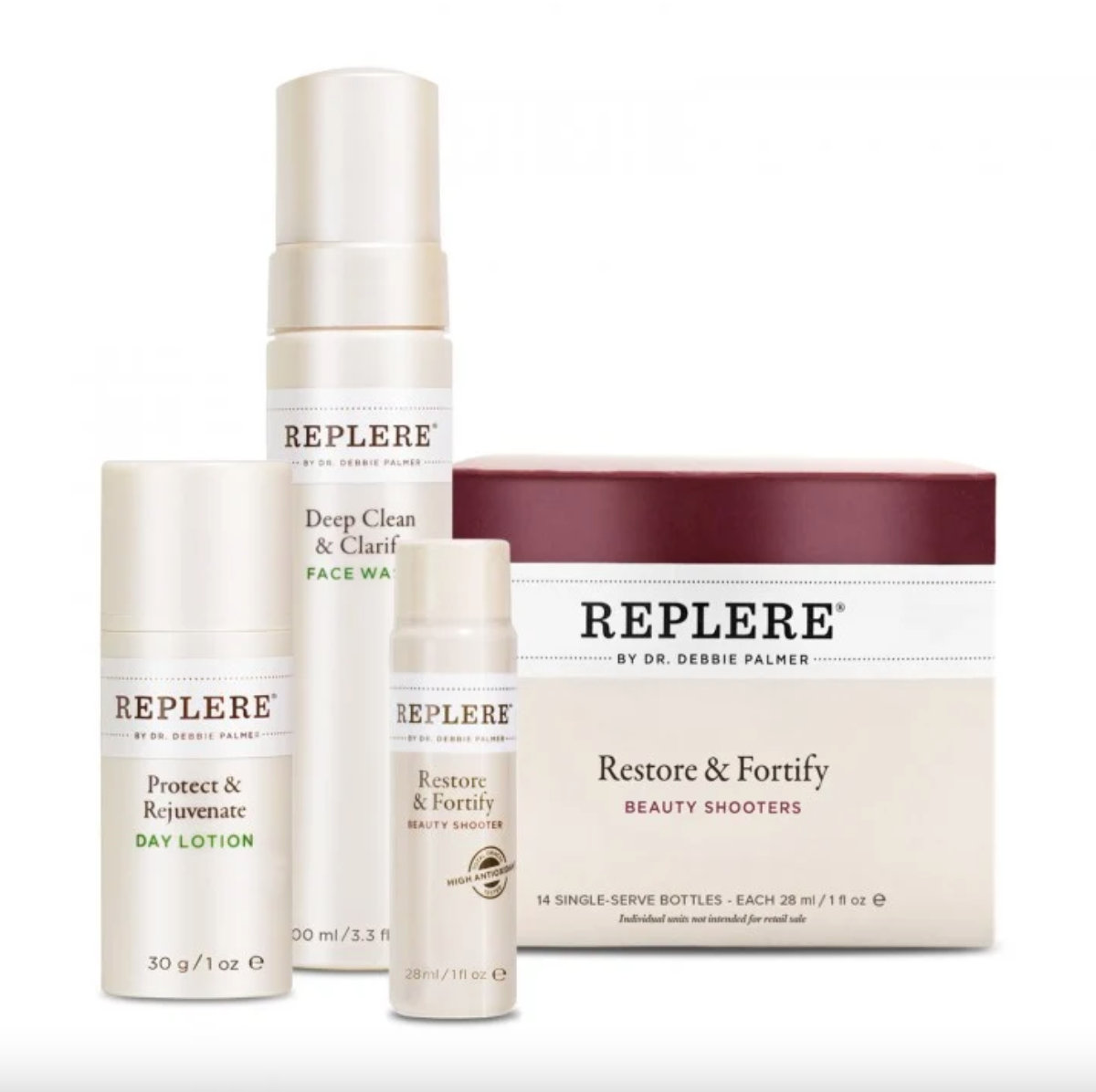
Rather than relying on a single antioxidant, Replere uses a broad spectrum of antioxidant-rich botanical ingredients including coffee fruit, grape seed, berries, green tea, pomegranate, and other plant extracts designed to provide a multifaceted approach to oxidative stress. The formulations also contain vitamin C and vitamin E. What I find meaningful is that we didn’t just look at antioxidant activity in a laboratory. Replere has also been evaluated as a finished skincare system in a 12-week, double-blind, randomized, controlled clinical study, with improvements reported in the appearance of fine lines and wrinkles, firmness, hyperpigmentation, redness, clarity, and overall brightness. The goal wasn’t to fine one miracle antioxidant but to formulate a stable, well-designed combination or antioxidants that can help the skin defend itself against and repair from the cumulative oxidative stress of everyday life.
What are some antioxidant-rich foods you recommend incorporating into a healthy diet for better skin?
When it comes to skin health, I’m a big believer in looking at nutrition as part of the bigger picture. I appreciate the Mediterranean diet because it naturally incorporates so many foods that are rich in antioxidants and other nutrients that support overall health and healthy skin. Some of my favorites are berries, which are rich in polyphenols; colorful vegetables such as peppers, leafy greens, and broccoli; and fruits such as oranges and other citrus, which provide vitamin C. Extra-virgin olive oil is another important part of the Mediterranean diet and is rich in antioxidant polyphenols as well as healthy monounsaturated fats.
I also recommend nuts and seeds, particularly walnuts and almonds, because they provide vitamin E and healthy fats. Legumes, herbs, and spices can give additional antioxidants, and coffee and tea are another nice source of polyphenols. I like to think about this from a holistic perspective: what we put into our bodies can complement what we put on our skin. Topical antioxidants can support the skin’s defenses and repair the skin from the outside, while a nutrient-dense, Mediterranean-style diet supports overall health from the inside. My advice is: eat the rainbow, choose whole foods, and make antioxidant-rich plant foods a regular part of your diet.
There are countless anti-aging products and treatments available today. How can women distinguish between meaningful skincare innovations and beauty trends?
I think one of the biggest challenges for women today is that there are so many skincare products and treatments that promise to be the next big thing. As a dermatologist, I always encourage my patients to step back from the marketing ad ask a few simple questions: What is the science? Has it actually been studied? And does the evidence show a meaningful improvement in the skin? A true innovation should have more than an interesting ingredient or a compelling before and after photograph. I want to see clinical research, studies that are well designed, that evaluate the actual finished product or treatment, and that demonstrate results that are meaningful.
I also think it’s important to understand what problem the innovation is actually solving. Does it address a specific biological pathway involved in skin aging? Does it improve the delivery or stability of an ingredient? Does it produce a result that existing technologies or ingredients can’t achieve as well? Those are the kinds of questions that distinguish innovation from simply repackaging an old concept in a new way. For me, the sweet spot is where science, innovation, safety and meaningful results intersect. That’s where skincare become more than a trend, it becomes something that can improve the health and appearance of the skin over time.
What are some common skincare mistakes you see women making when trying to maintain youthful-looking skin?
I see a few common mistakes and many of them come from trying too hard. One mistake is overdoing the skincare routine. Patients sometimes layer multiple exfoliants, retinoids, acids and other ingredients because they think more activity will produce better results. This can disrupt the skin barrier, leading to irritation, dryness, redness, and inflammation. I also see patients constantly switching products. They may use something for a few weeks, don’t see an immediate transformation, and move on to the next product. Skin biology takes time and may effective ingredients require consistent use over months to really appreciate their benefits.
Another common mistake is focusing exclusively on wrinkles. Healthy, youthful-looking skin is about more than the absence of lines. Evenness of pigmentation, redness, texture, luminosity, hydration, and firmness all contribute to how youthful the skin looks also. Patients also sometimes forget that skincare is only one part of the equation. Sleep, nutrition, exercise, stress management, and healthy relationships all contribute to the health and appearance of our skin. My philosophy is to simplify rather than complicate: protect the skin, maintain a healthy barrier, use a few well-chosen, evidence-based ingredients consistently, and take a holistic approach to aging.
If a woman wanted to simplify her skincare routine while still prioritizing healthy aging, what would you recommend she focus on?
If a woman wanted to simplify her skincare routine while still prioritizing healthy aging, I would tell her to focus on the fundamentals. In the morning, I would focus on a gentle cleanser and a well-formulated antioxidant product to help support the skin against daily environmental stress. I also recommend a broad-spectrum SPF 30 or higher mineral based sunscreen to be applied every two hours with prolonged sun exposure. At night, I would keep it simple: cleanse, moisturize, and use one evidence-based anti-aging active that is appropriate for your skin. I think maintaining the skin barrier is important. Healthy skin is resilient skin, so a good moisturizer is foundational. Skincare is only one piece of healthy aging. Nutrition, sleep, exercise, stress management, and healthy relationships all contribute to the health of our skin and our bodies.
What was most important to you when developing Replere’s formulations?
When I was developing Replere’s formulations, the most important thing to me was finding the right balance between science, efficacy, safety, and a more natural approach to skincare. As a dermatologist, I didn’t want to create products simply because an ingredient was natural or trendy. I wanted every ingredient to have a purpose. I was particularly interested in ingredients with scientific evidence showing that they could help address the processes that contribute to skin aging such as oxidative stress, inflammation, collagen breakdown, pigmentation, and loss of the skin’s resilience. At the same time, I wanted to be thoughtful about what we were putting on the skin.
My osteopathic training and my holistic philosophy have always made me think about wellness as a whole, and that philosophy carried into the way I approached formulation. I also wanted the products to work together as a system. Rather than creating a collection of individual products that each do one thing, I wanted to formulate a comprehensive approach to healthy aging, protecting the skin from environmental stress while supporting hydration, barrier function, repair, tone, texture and firmness. I wanted results without compromising my philosophy. With Replere, you don’t have to choose between natural-inspired skincare and science-backed efficacy. You can be thoughtful about the ingredients you use while still demanding that the products perform. Replere is rooted in science, inspired by nature, and designed to support the skin’s health and beauty.
What are the skincare habits you personally never skip?
There are a few skincare habits I personally never skip, and they really come down to consistency rather than complexity. Every morning, I cleanse and use antioxidants to defend against the oxidative stress I’m exposed to every day. With sun exposure, I apply a broad-spectrum SPF 30 or greater. At night, I cleanse my skin and moisturize and I use evidence-based ingredients that support healthy aging. I pay attention to maintaining my skin barrier because I don’t believe that irritating your skin for anti-aging is a good strategy. Beyond what I put on my skin, I try to remember that skin health starts from within. A healthy diet, adequate sleep, exercise, hydration, healthy relationships and managing stress are all part of how I think about healthy aging. My philosophy is simple: protect your skin, support it with scientifically backed ingredients, maintain the barrier, and be consistent. I think those habits, along with lifestyle, are more powerful than chasing the newest skincare trend.
What excites you most about the future of dermatology and skincare?
What excites me most about the future of dermatology and skincare is how much more we’re learning about the biology of aging and the incredible ability we now have to translate that science into meaningful ways of caring for the skin. I think we’re moving toward a much more sophisticated understanding of healthy aging—not simply treating wrinkles after they appear, but understanding the processes that contribute to aging in the first place, including oxidative stress, inflammation, changes in the skin barrier, collagen degradation and environmental damage. What excites me most is that I don’t think the future has to be about doing more. It can actually be about doing better—using smarter formulation, better delivery systems, and stronger scientific evidence to create products and treatments that are both effective and thoughtful about the long-term health of the skin. This is very aligned with why I created Replere. My vision has been to bridge science, the wisdom of nature, and a holistic approach to wellness. I think the future of skincare is going to be increasingly focused on helping people maintain healthy, resilient, beautiful skin throughout their lives—not fighting the natural aging process, but helping people age well.

***
Yvon Lux is the editor of her Apple News channel covering lifestyle news and current events. When she’s not busy writing about impactful brands and standout products, she and her husband can be found snuggling with their emotionally needy, perpetually sleepy golden retriever, or she’s chipping away at her Juris Doctor. Connect with her on Instagram and subscribe to her Apple News channel.