The Beauty of Intention: Laura Rudoe on Building Evolve Organic Beauty
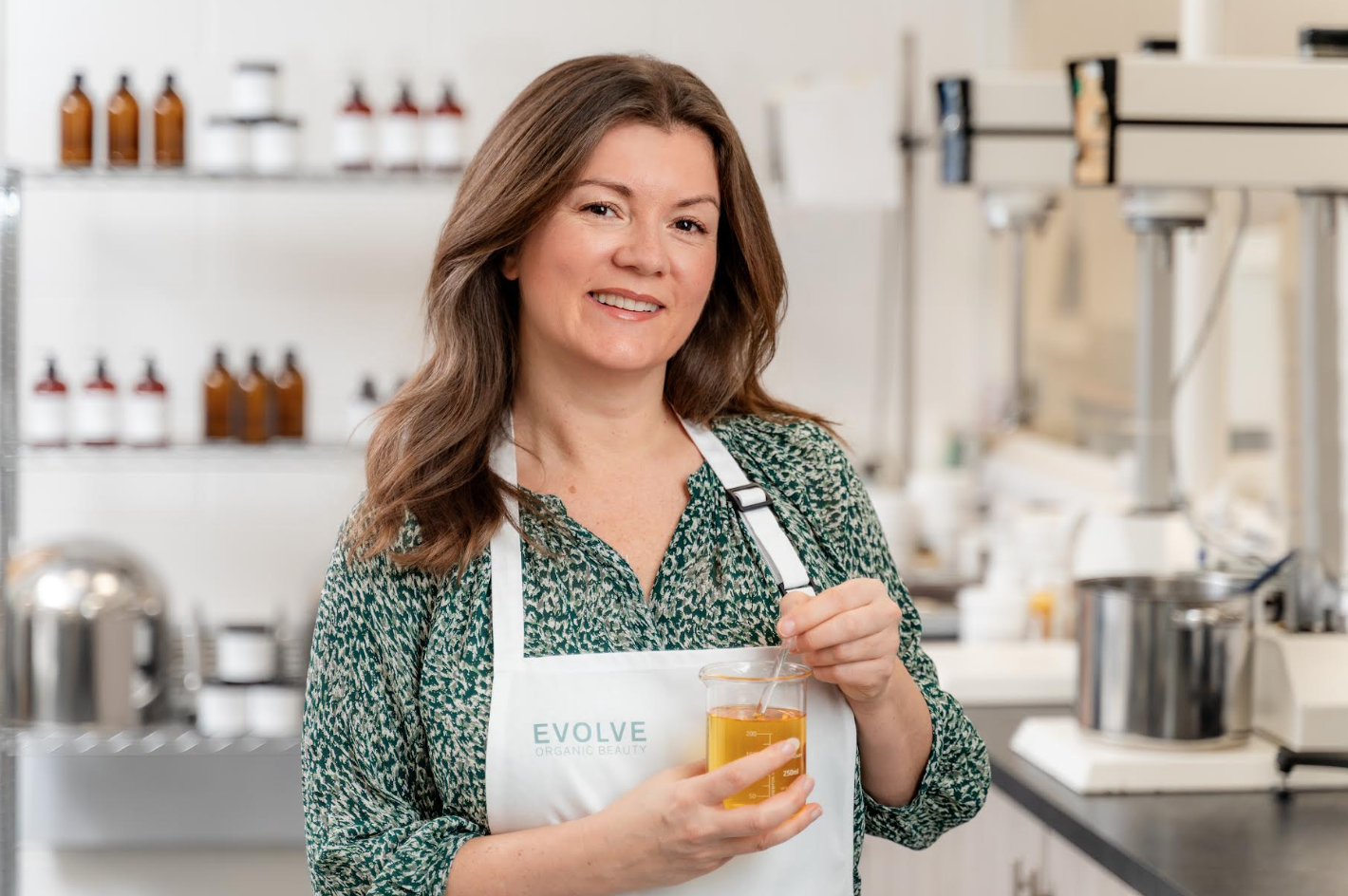
In an increasingly crowded beauty landscape, where consumers are looking beyond efficacy to consider the ingredients, values and practices behind the products they use, Laura Rudoe has spent more than 15 years building a brand around a more thoughtful approach to skincare. The founder of Evolve Organic Beauty, Rudoe launched the British beauty label in 2009 with a vision of making natural and organic beauty both accessible and effective, drawing on her own experiences with skincare and her belief that businesses should make a positive contribution to the world.
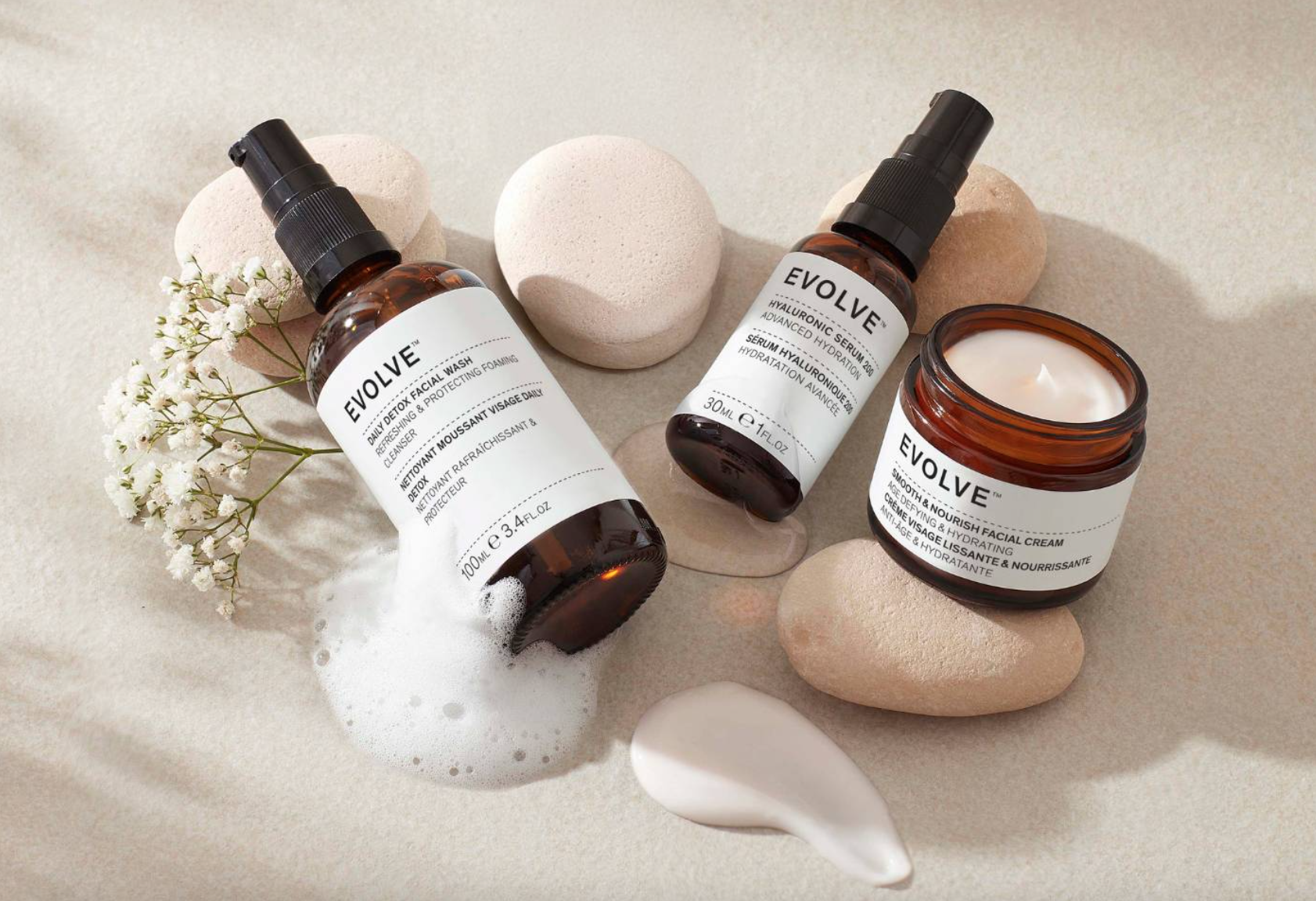
Today, Evolve Organic Beauty brings together nature-inspired ingredients, modern skincare science and small-batch production at its Hertfordshire studio. Rudoe remains closely involved in the creation of the brand’s formulations, from researching ingredients to developing products designed to care for the skin while keeping environmental responsibility in focus. In conversation, she reflects on the personal experiences that inspired Evolve, the realities of building an independent beauty business, and how she sees the future of clean beauty evolving.
When you launched Evolve in 2009, what did you believe the beauty industry was getting wrong?
When I launched Evolve in 2009, natural and organic beauty was still quite niche, and the assumption was that choosing it meant compromising on how well a product worked, how it felt or how enjoyable it was to use. I didn't think people should have to make that choice. I wanted to make products that performed and were a pleasure to use, with natural and organic options across the whole routine. The other gap was clarity. People were starting to read ingredient lists, but it wasn't easy to know what natural or organic actually meant on a pack. I wanted Evolve to be open about what goes into its products and the standards behind them, and to let that speak for itself.
In 2015, you made the decision to bring production in-house. That sounds like a significant risk for an independent company. What made you take that leap?
It was a big decision, and it came largely from the limits of outsourcing. When we launched, we worked with a family-run manufacturer who was a great partner, but lead times could be as long as 12 weeks and there was a minimum of 1,000 units per line. For a small, growing business, that made it very hard to try new ideas, make special sizes or respond quickly when customers wanted something. So in 2015 we did the opposite of what most beauty brands do as they grow, and brought production in-house. We started in a tiny studio with equipment we found on eBay and a very steep learning curve. One of our mixers had actually come from a pizza factory! It gave us control. We can make products in small batches, execute new ideas and take a product from the lab bench to a finished batch far more quickly. Everything is still formulated and made by our own team in Hertfordshire, England, including the products our customers in the US are using. The biggest lesson for me was to question the standard playbook. The way most companies grow isn't necessarily the right way for you.
Evolve talks about combining natural ingredients with modern science and clinical performance. Why was it important to you that “natural” didn’t have to mean compromising on efficacy?
I've always been interested in science and ingredients, so I've never seen natural and science as opposing ideas. For me, Evolve was founded to prove that you could have both. I didn't want Evolve to create products that were natural simply for the sake of being natural. They needed to work. That's why we've always looked for scientifically backed and efficacy-tested actives, from hyaluronic acid and bio-retinol to peptides, ceramides and newer biotechnology-derived ingredients, too. What's exciting now is how far science has advanced. Biotechnology and green chemistry are opening up new possibilities, and we can bring those into natural and organic formulations. It's also why I developed our Skin Longevity Framework, which is grounded in the science of how skin ages. For me, the future of beauty is nature and science working together.
The beauty conversation around “clean” and “natural” has changed enormously since 2009. Has your own definition of clean beauty evolved?
Definitely. In 2009, the conversation was much more focused on what you left out of a product. Today, I think we need to look at the whole picture. For me, clean beauty is about being thoughtful about every ingredient we choose: where it comes from, how it is produced, how safe and effective it is, its environmental impact and what it actually contributes to the finished formula. I've also always been focused on transparency. Clean isn't a regulated term, so people need something more reliable than the language on the front of a pack. That's why certifications matter so much to us. Over 90 per cent of our range is certified to the COSMOS Organic or Natural standard. That means every ingredient has been screened by the certifying body, from how it was extracted and processed to which preservatives were used. It's a precautionary standard, too. It avoids a lot of ingredients that are permitted but still carry open questions. COSMOS Natural is the closest thing there is to an independently verified clean standard. My definition is broader now. It's about making considered choices and being able to explain why you made them.
How do you decide when a natural ingredient genuinely deserves a place in an Evolve formula rather than simply sounding appealing on a label?
I'm naturally very curious, so I ask a lot of questions. Where does the ingredient come from? What does it actually do? How is it processed? How effective is it? What's its environmental impact? And is there a better alternative? The ingredient has to have a genuine purpose in the formula. I don't want to include something simply because it sounds exciting or makes a good marketing story. Because we source and manufacture our own products, we also have much greater visibility over our ingredients. We hold the information on every ingredient we use, which means we can properly assess things like sourcing, traceability and certification. Ultimately, I want every ingredient to earn its place. If it's safe, effective, responsibly sourced and genuinely adds value to the formula, then that's when it becomes interesting to us.
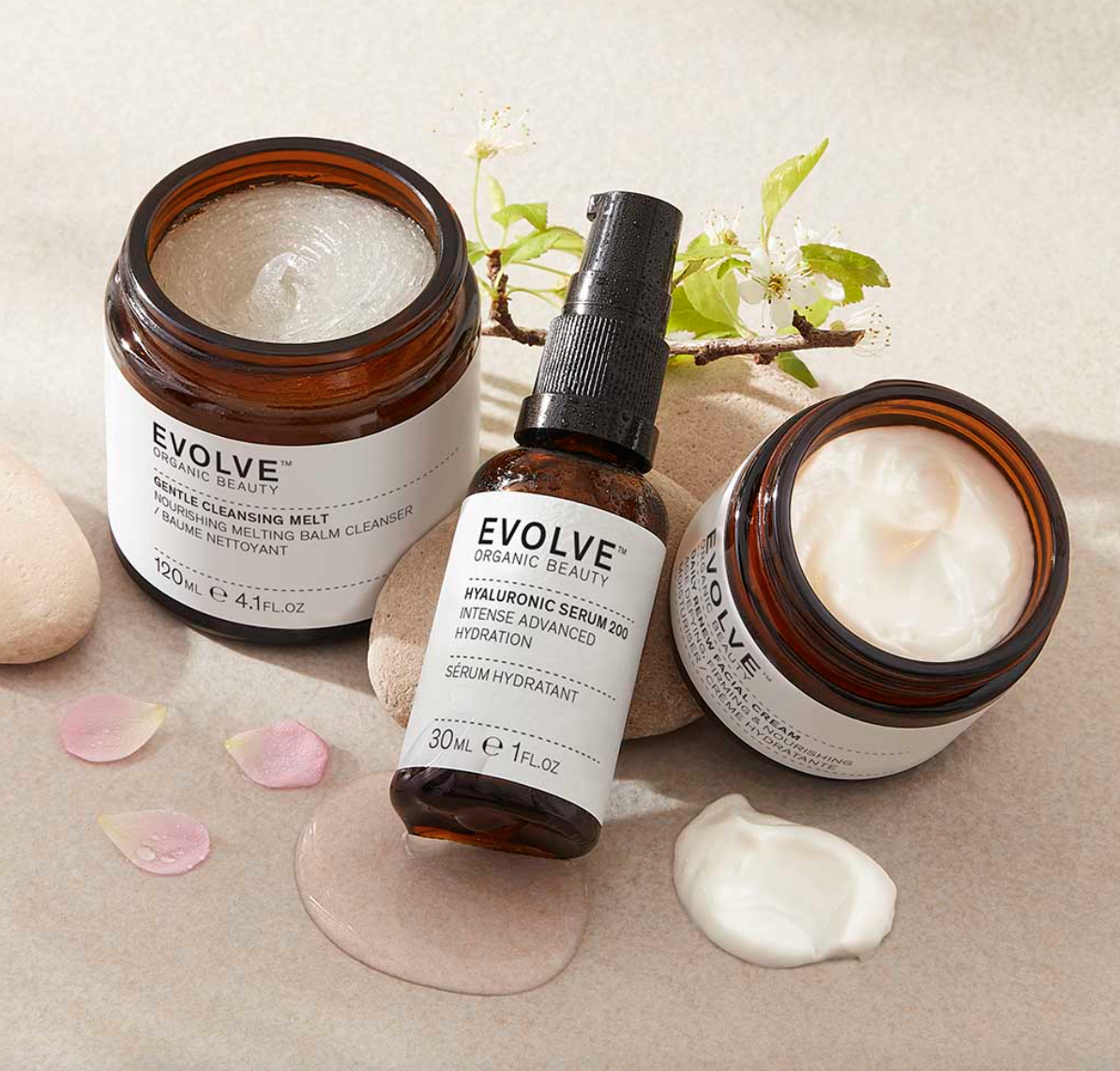
Sustainability has been part of Evolve since the beginning, from your original recycled-milk-bottle packaging to the more recent bio-based packaging. Which sustainability decision has been the hardest to make commercially?
I think the difficult decisions are often the ones where the more sustainable option comes with a commercial or practical trade-off. As an independent business, we don't have the buying power of a huge multinational, so changing materials or packaging can have a very real impact on costs. Sample sachets are a good example. We haven't yet found a recyclable or compostable format that passes our stability testing, but we still need sachets commercially. So, for now, we continue to use a format that isn't easily recyclable while we keep looking for a better solution.
That's something we've always tried to be honest about. Sustainability isn't about finding one perfect material or making the cheapest choice; it's about looking at the bigger picture, understanding the trade-offs and continually improving. We've moved into refill formats, Prevented Ocean Plastic, FSC-certified cartons and bio-based packaging, while continuing to work on some of the harder challenges, such as reducing plastic in smaller pumps and sampling. Our sugarcane tubes are a good example of where we've been able to make a meaningful change. They're made using sugarcane bagasse and have a 49 percent smaller carbon footprint per kilogram than PET plastic, based on a 2022 life cycle assessment by the University of East Anglia. I think the important thing is to keep moving. You don't need to have every answer on day one, but
you do need to be honest about the decisions you're making, the trade-offs involved and where there is still work to do.
In 2021, Evolve mapped and offset its carbon footprint and committed to reducing emissions. What have you learned about the gap between wanting to be a sustainable business and actually running one?
We measure our carbon footprint across scopes 1, 2 and 3 and publish what we find. We also publish an estimated carbon footprint on every product page, and we're one of only a few beauty brands to do that. We've funded verified climate projects in the Amazon rainforest and Indonesian peatlands, alongside reducing our own footprint rather than instead of it, and we look for projects with a biodiversity benefit as well as a carbon one. The area we've genuinely found hard to shift is the footprint itself. Most of it sits in Scope 3, which is common for a small business and means a lot of it, transport and distribution especially, is outside our direct control. That's meant scaling back how ambitious we can be about the pace of reduction until we have more levers to pull.
What has been the most difficult part of being a woman building a beauty company for more than 15 years?
I don't think being a woman has held me back since I've had my own business, though I think that's partly because I've never tried to raise external capital, which is where the gap tends to show up most for women. I did an MBA at Harvard, and the confidence that gave me in my own judgement has mattered more than I probably realised at the time. Where I did feel it was earlier in my career, when I started work in 1999 and it wasn't always a comfortable place to be as a woman. Things have changed a great deal since, and my own confidence has grown so much since I launched Evolve that I don't look for validation from other people any more. That's come from proving to myself, over
time, that it works.
The challenges I have had building the business have mostly been the ordinary ones that come with any growing company: learning to back myself when a decision carries real risk or there is no obvious path, and living with the setbacks along the way. I've learned to treat those as something to learn from, adapt and keep going. Where I do think being a woman shows up is in how I lead. My style is heart-based: leading with compassion, and leading from the back rather than the front, which isn't how leadership is usually pictured. I don't have to adopt someone else's idea of what a successful leader looks like. Building strong relationships, being curious and treating people with kindness and respect have always mattered to me, and I think those qualities are sometimes underestimated in business, but over the long term I've found them to be some of the most valuable.
Has your relationship with ambition changed since you first founded Evolve?
Yes, although I'm every bit as ambitious. When I started Evolve, my ambition was about proving the idea could work: building a brand from scratch and showing that natural and organic products didn't have to mean compromising on performance. Today I think about growth differently. What matters most to me is building a business that's profitable and that customers keep coming back to. The US is a lovely example. It's a big opportunity, and we're building it thoughtfully, with Whole Foods Market as our anchor partner alongside retailers such as Credo. We're not assuming that what worked in the UK will work in the same way in the US. We want to understand what American customers are looking for and learn from them. After more than 15 years, I'm much clearer about what I want Evolve to become, and about what I won't compromise to get there.
Evolve launched at a time when “organic beauty” was still relatively niche. How have you seen the consumer conversation change since 2009?
It's changed enormously. In 2009, you often had to explain why natural and organic beauty mattered and why consumers should be interested in what was inside their products. Today, consumers are much more informed. They're asking about ingredients, efficacy, sourcing, sustainability and the evidence behind claims. They're also much more willing to research products and question what they're being told. What's particularly exciting is that the conversation around science has changed too. Natural beauty and science are no longer necessarily seen as opposites. Consumers are increasingly interested in biotechnology, clinically backed ingredients and sophisticated formulations. That's very encouraging for us because it's essentially the philosophy Evolve has had from the beginning: you shouldn't have to choose between better ingredients and products that genuinely work.
Do you think the beauty industry has genuinely become more responsible, or have some of the same problems simply been repackaged with new language?
I think there has been genuine progress, but I also think we need to remain questioning. Consumers have much more information than they did 15 years ago, and there is greater awareness of ingredients, supply chains, packaging and environmental impact. But at the same time, the language around beauty has become more complicated. Terms like clean, green, and natural can mean very different things depending on who is using them. That's why I think evidence and transparency are increasingly important. Rather than simply asking whether something sounds sustainable or clean, I'd encourage consumers to ask what the claim actually means, whether there's independent certification and whether the brand can show evidence behind it.
What do you wish women understood about skincare that marketing often makes unnecessarily complicated?
That looking after your skin can be really simple, and it should feel enjoyable. There's so much choice now, which is wonderful, but it can also make you feel you need a product for every step. Getting to know your skin, finding a few well-formulated products you love and using them consistently tends to matter far more than a long routine. It's also lovely to be curious about what you're using. You don't need to be a cosmetic chemist, but knowing what an ingredient is there to do makes choosing so much easier. Skincare should be a small moment of looking after yourself, and it should leave you feeling good.
In 2025, Evolve introduced a new visual identity and described it as a “fresh, greener identity.” Why was now the right moment to evolve the brand again?
Evolve has changed so much since we launched in 2009. We've grown from a tiny independent business into a brand sold in around 26 markets, our range and formulations have developed, and we're building our presence in the US. We felt the identity needed to catch up with all of that. The rebrand covered our packaging and our brand pillars, and we did a lot of research with our customers before we made any decisions. We wanted it to feel fresher and more modern, while still being unmistakably Evolve. Our four pillars are Pure, Proven, Purposeful and Created By Us, and I think they capture who we've
become really well. We're still independently owned, we still make everything ourselves, and we're as passionate about our ingredients as we were at the start.
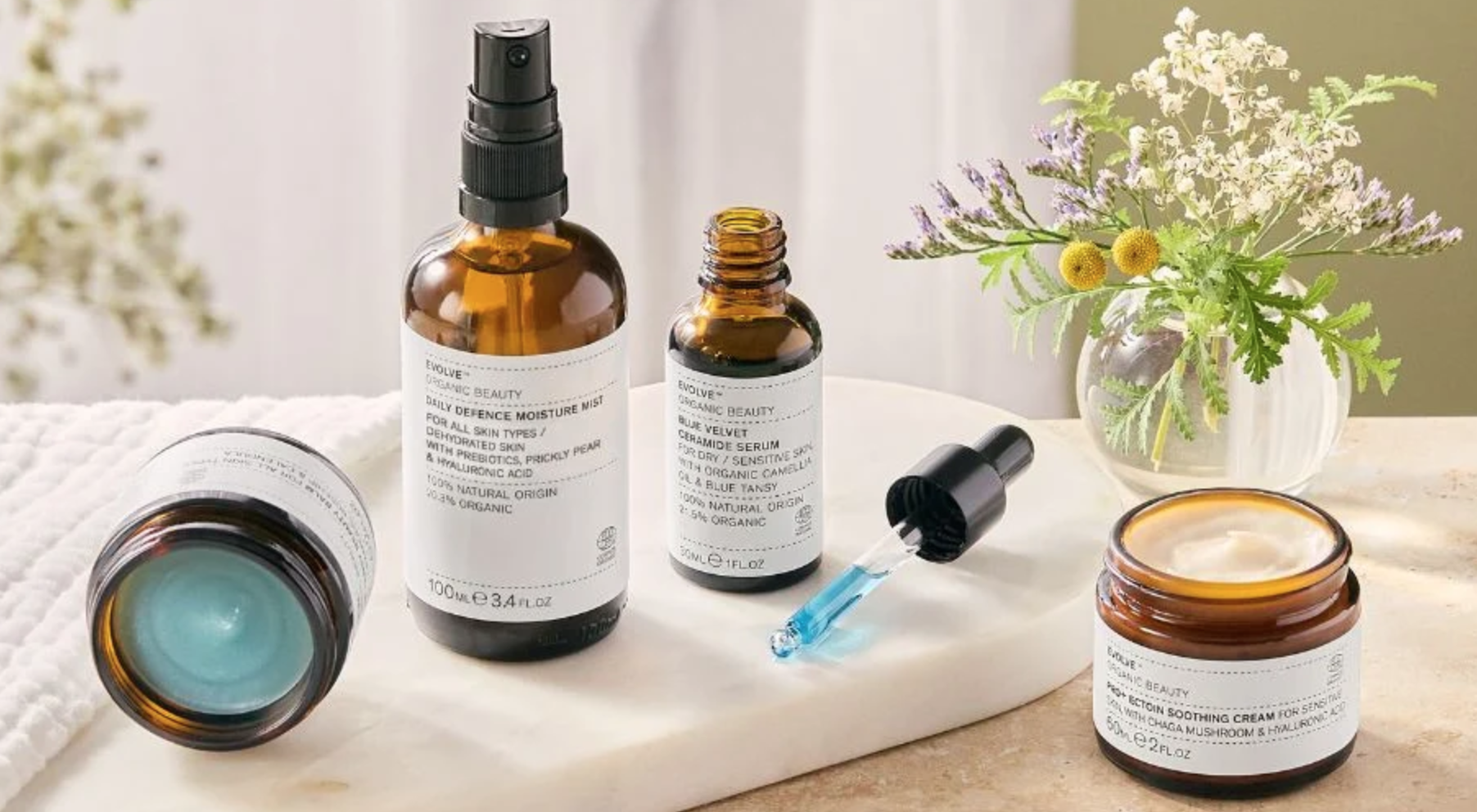
***
Yvon Lux is the editor of her Apple News channel covering lifestyle news and current events. When she’s not busy writing about impactful brands and standout products, she and her husband can be found snuggling with their emotionally needy, perpetually sleepy golden retriever, or she’s chipping away at her Juris Doctor. Connect with her on Instagram and subscribe to her Apple News channel.