

Data Centers Could Be Fueling PFAS Pollution
As artificial intelligence drives a new generation of massive data centers, environmental advocates are raising an unsettling question: Could the technology promising a more efficient future be creating a new source of “forever chemical” pollution?
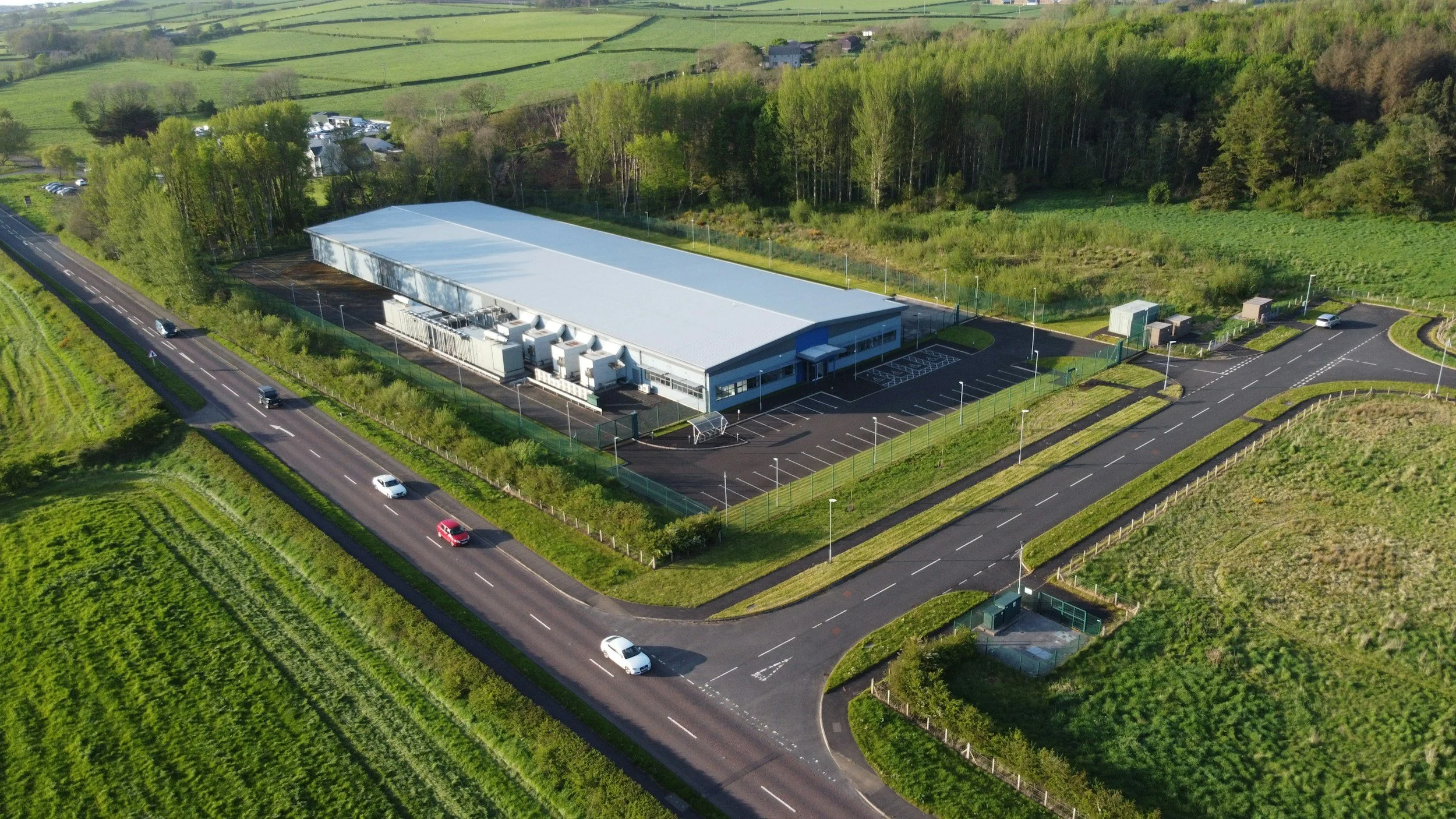
Artificial intelligence may exist in the cloud, but the infrastructure powering it is decidedly physical.
Behind every AI-generated image, chatbot response and algorithmic prediction are rows of increasingly powerful computer chips operating inside enormous data centers. Those machines generate extraordinary amounts of heat, creating an engineering problem that has become nearly as important as the computing itself: How do you keep them cool?
The industry's answer is increasingly turning toward liquid cooling.
And according to a new analysis from environmental advocacy organization Food & Water Watch, some of the chemicals involved in these emerging cooling systems could create another environmental concern: PFAS, the class of highly persistent chemicals commonly known as “forever chemicals.”
The finding adds a new dimension to the growing debate over the environmental footprint of artificial intelligence. Data centers are already facing scrutiny over electricity consumption, water use, land development and air pollution. Now, environmental advocates are warning that the chemicals used to keep the computers running could create another pathway for persistent pollution.
The implications extend far beyond the buildings themselves.

Why PFAS are such a concern
PFAS, or per- and polyfluoroalkyl substances, are not one chemical but a vast family of thousands of compounds. Food & Water Watch describes more than 12,000 known PFAS chemicals and notes that many are exceptionally persistent in the environment and can remain in the human body for years.
Their durability is precisely what made PFAS useful.
They have been incorporated into products and industrial processes because they can resist heat, water, oil and chemical degradation. That same durability, however, has created a long-running environmental problem. Once released, many PFAS do not simply disappear.
They can move through water and soil, accumulate in ecosystems and persist for extremely long periods. Certain PFAS have also been associated through scientific research with adverse health effects. That history has prompted governments, scientists and communities to push for tighter controls on their production and use.
Now, Food & Water Watch argues, the rapid construction of AI data centers could create new demand for PFAS-related chemicals at precisely the moment regulators and consumers are attempting to reduce their use.
The cooling problem
The connection begins with heat.
Traditional data centers have often relied on air-conditioning and water-based cooling systems. But the computational demands of artificial intelligence are pushing servers and chips to operate at increasingly high power densities.
Liquid cooling offers an attractive alternative because liquids can transfer heat more efficiently than air. That could reduce the amount of water and energy needed to cool certain facilities. But there is a tradeoff that is receiving considerably less public attention.
Food & Water Watch points to newer liquid-cooling technologies that use specialized chemical fluids and highlights a partnership between data-center developer DataVolt and Chemours, a major U.S. chemical manufacturer associated with PFAS and the company behind Teflon. According to the organization, the partnership involves hydrofluoroolefins, or HFOs, used as cooling fluids that can degrade into a type of PFAS. That distinction matters.
The industry's search for cooling technology that uses less water could potentially shift some environmental pressure from water consumption to chemical management. In other words, a system can be more water-efficient without necessarily being environmentally impact-free.
What happens when cooling fluids escape?
Data centers are engineered environments, but they are not chemically sealed worlds.
Food & Water Watch argues that small leaks from liquid-cooling systems are a known issue and that prolonged exposure of cooling fluids to computer components can cause degradation of those components, contaminating the fluid and eventually requiring its disposal.
The organization's analysis raises concern about what happens next.
If PFAS-containing or PFAS-related fluids are disposed of through incineration, the organization argues, the chemicals could be released into the air or remain in residual ash that ultimately goes to landfills. That creates a potential lifecycle problem.
The environmental footprint of a cooling fluid does not necessarily end when it is drained from a server system. It becomes a question of where that chemical goes next.
Importantly, these are concerns raised by Food & Water Watch, not evidence that every liquid-cooled data center is currently releasing hazardous levels of PFAS into surrounding communities. Cooling technologies and chemical formulations differ, and the actual risks depend on the specific substances, containment systems, disposal practices and exposure pathways involved.
But the question is significant enough to warrant scrutiny as the technology scales.
The problem may start before the data center opens
Perhaps the most consequential aspect of the PFAS connection is that cooling systems are only one piece of the puzzle.
According to Food & Water Watch, PFAS are also used in equipment found inside data centers, including coatings on pipes, cables and other components. With equipment replaced frequently as computing technology advances, the organization argues that PFAS-containing materials can ultimately enter the waste stream and reach landfills.
Then there is the technology at the center of the entire operation: the semiconductor.
Modern computer chips require extraordinarily complex manufacturing processes. Food & Water Watch argues that PFAS are essential to the production of the microchips used to power data-center computers. That means the potential environmental story does not begin when a server is switched on.
It may begin thousands of miles away, at the factories producing the components.
The communities making the chemicals
Food & Water Watch specifically identifies proposed expansions by Chemours at manufacturing facilities in Fayetteville, North Carolina, and Parkersburg, West Virginia, arguing that increased production could help meet demand associated with semiconductor manufacturing and the growing data-center industry.
Those communities have already experienced years of controversy surrounding PFAS contamination.
The organization says neighboring communities have reported serious health concerns and points to research indicating PFAS emissions from such manufacturing facilities, while also citing Chemours' air-permit application as evidence of potential additional PFAS emissions associated with expansion.
This creates a much larger picture. The environmental footprint of AI is not confined to Silicon Valley, Northern Virginia, Texas or the other regions where massive data centers are being built. It can extend through a supply chain that includes chemical manufacturers, semiconductor plants, energy providers, transportation networks and waste facilities. The communities carrying those burdens may never see the finished technology.
A familiar industrial playbook?
Food & Water Watch makes an even broader argument, connecting the emerging data-center cooling market with companies historically associated with fossil fuels and industrial chemicals.
The organization points to oilfield-service companies including Halliburton, Baker Hughes and Liberty Energy, as well as oil majors ExxonMobil and Shell, as companies moving into or developing products for the data-center cooling market. That convergence is worth watching.
The AI boom represents an enormous new market for electricity, cooling infrastructure, construction materials, chemicals and specialized equipment. For companies already operating in fossil fuels and industrial chemicals, data centers offer a rapidly expanding customer base.
Food & Water Watch argues that some of the same companies involved in producing chemicals for oil and gas extraction are now positioning themselves to supply the infrastructure behind artificial intelligence.
The question is whether the regulatory framework governing these chemicals will evolve quickly enough to keep pace with their new applications.
The transparency problem
There is another issue that makes the PFAS question particularly difficult to investigate: What exactly is inside the cooling systems? Food & Water Watch argues that data-center developers can use nondisclosure agreements and trade-secret protections to limit public information about the chemicals used in their cooling systems. That presents a familiar tension between commercial confidentiality and public health.
Companies understandably consider proprietary technology valuable. But when industrial chemicals are involved, communities may reasonably want to know what substances are being transported, stored, used and discarded in facilities operating near their homes.
The issue becomes especially important when a chemical is persistent, difficult to remove from the environment and potentially associated with health risks. A community cannot assess a chemical risk it cannot identify.
The uncomfortable contradiction
There is a strange contradiction at the center of the AI industry's sustainability story. One of the industry's most promising responses to the enormous water demands of data centers is to develop cooling technologies that require less water. That is potentially a meaningful environmental improvement. But if those systems rely on persistent chemicals, the environmental calculation becomes considerably more complicated.
Reducing water consumption is not the same thing as eliminating environmental impact. It raises a larger question about how we measure sustainability in the first place. If an AI data center uses less water but requires more specialized chemicals, is it actually greener? If a cooling fluid lasts longer but creates a difficult waste-disposal problem, where should that impact be counted?
And if a semiconductor plant must increase chemical production to supply an expanding data-center industry, should the environmental cost of manufacturing those chips be included in the footprint of the AI services they enable?
Those questions rarely appear when companies advertise the next generation of “efficient” data centers.

What happens next?
The PFAS issue surrounding data centers remains an emerging area of environmental scrutiny. Food & Water Watch is an advocacy organization with an explicit campaign against new AI data centers, so its conclusions should be evaluated alongside independent toxicology research, regulatory records, chemical disclosures and information from data-center operators and chemical manufacturers. But dismissing the issue because it originates with an environmental advocacy group would miss the larger point.
The AI industry is scaling at extraordinary speed. Infrastructure designed today could operate for decades. That makes the decisions being made now particularly consequential. Before communities approve another enormous data-center campus, there are questions worth asking:
What chemicals will be used to cool the servers?
Are any of them PFAS or substances capable of degrading into PFAS?
How are leaks detected and contained?
How are used cooling fluids disposed of?
What happens to PFAS-containing equipment when servers are replaced?
Which chemical manufacturers are supplying the technology?
Where are those chemicals being produced?
What emissions and wastewater are generated upstream?
And perhaps most importantly:
Who is responsible for the pollution if something goes wrong?
The AI revolution is often described as a leap into the future. But the PFAS question reminds us that some of its most consequential impacts may come from chemicals developed decades ago, manufactured in communities already dealing with contamination, and quietly embedded in the machinery powering our supposedly digital lives.
The cloud may be virtual. Its chemical footprint is not.
***
Yvon Lux is the editor of her Apple News channel covering lifestyle news and current events. When she’s not busy writing about impactful brands and standout products, she and her husband can be found snuggling with their emotionally needy, perpetually sleepy golden retriever, or she’s chipping away at her Juris Doctor. Connect with her on Instagram and subscribe to her Apple News channel.